

self-assembly systemThe furniture is straightforward and reliable to assemble: the satisfaction lies in finishing well. The trestles and seating uprights connect with M16 threads and nuts. The tops, braces/rails and shelves/backs are assembled with brackets, Chicago binders, bolts and nuts. Turning self-assembly into an enjoyable tactile game, each iteration is presented in a box as a kit with tools, hanging templates for the shelves and instructions. Self-assembly is an act of making. Research into what has become known as the IKEA effect shows that people value the things they have built themselves, provided they complete them successfully (Norton, Mochon and Ariely, 2012). A meta-analysis of fifty-five studies, with over five thousand participants, has since confirmed the effect, alongside links to a sense of ownership (Pelled et al., 2026). Assembly also engages the mind. Building with parts calls on spatial skills, the ability to visualise how pieces relate and fit together, which research has linked to mathematical thinking in early childhood (Verdine et al., 2014). Friedrich Froebel's kindergarten gifts, sets of blocks built on simple geometric relationships, showed that complex forms could arise from a few standard parts, and went on to shape the thinking of a generation of modernist architects and designers (Brosterman, 1997). Self-determination theory identifies competence and autonomy as basic psychological needs that support motivation and wellbeing (Ryan and Deci, 2000). The pleasure of fitting things together stays with us into adulthood. References Brosterman, N. (1997) Inventing Kindergarten. New York: Harry N. Abrams. Norton, M.I., Mochon, D. and Ariely, D. (2012) 'The IKEA effect: When labor leads to love', Journal of Consumer Psychology, 22(3), pp. 453–460. https://doi.org/10.1016/j.jcps.2011.08.002 Pelled, A. et al. (2026) 'Labor Leads to Love, Right? A Meta-Analysis of the IKEA Effect', Psychology & Marketing, 43(2), pp. 388–400. https://doi.org/10.1002/mar.70064 Ryan, R.M. and Deci, E.L. (2000) 'Self-determination theory and the facilitation of intrinsic motivation, social development, and well-being', American Psychologist, 55(1), pp. 68–78. https://doi.org/10.1037/0003-066X.55.1.68 Verdine, B.N., Golinkoff, R.M., Hirsh-Pasek, K., Newcombe, N.S., Filipowicz, A.T. and Chang, A. (2014) 'Deconstructing building blocks: Preschoolers' spatial assembly performance relates to early mathematical skills', Child Development, 85(3), pp. 1062–1076. https://doi.org/10.1111/cdev.12165
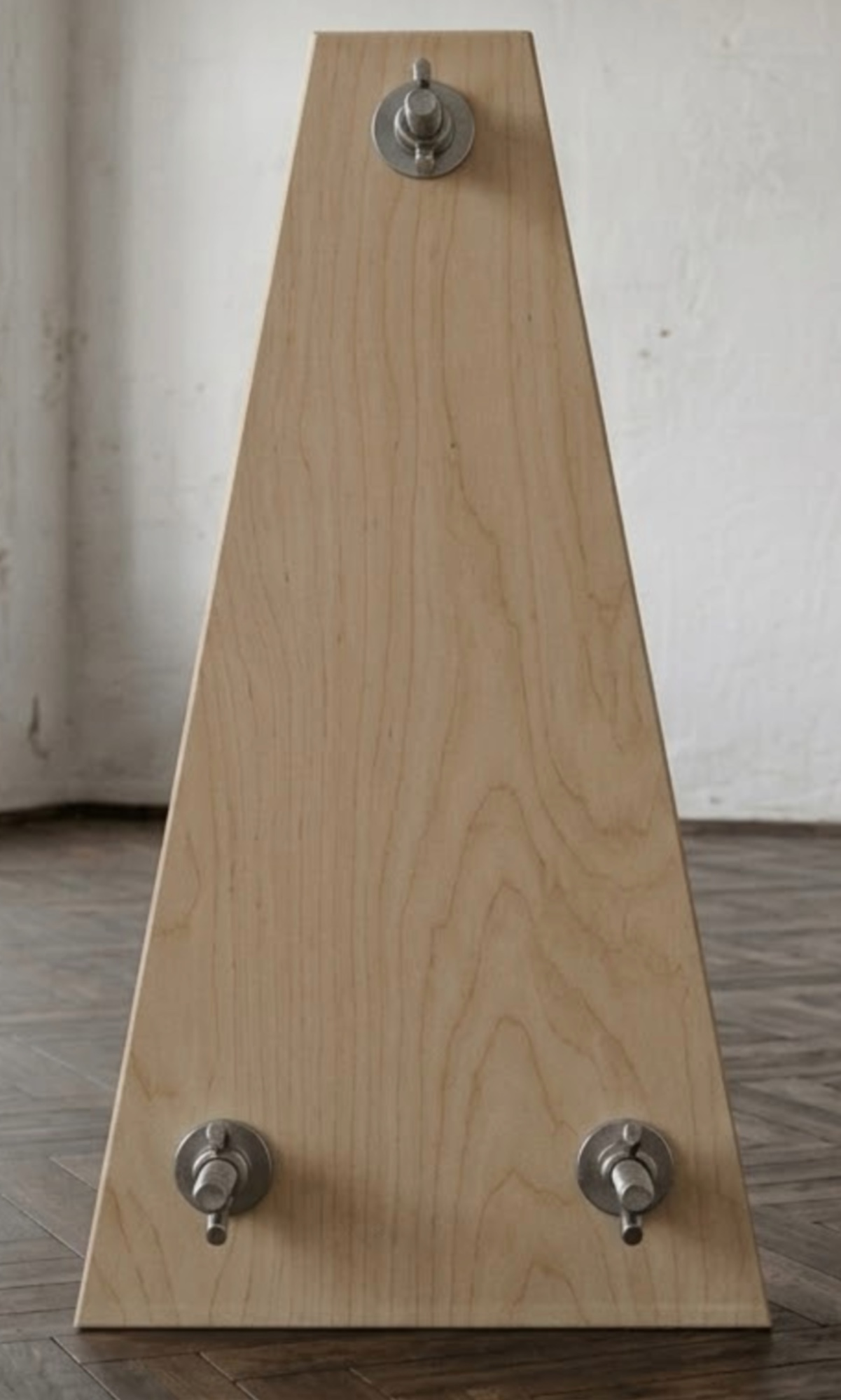
 The furniture is straightforward and reliable to assemble: the satisfaction lies in finishing well. The trestles and seating uprights connect with M16 threads and nuts. The tops, braces/rails and shelves/backs are assembled with brackets, Chicago binders, bolts and nuts. Turning self-assembly into an enjoyable tactile game, each iteration is presented in a box as a kit with tools, hanging templates for the shelves and instructions.
Self-assembly is an act of making. Research into what has become known as the IKEA effect shows that people value the things they have built themselves, provided they complete them successfully (Norton, Mochon and Ariely, 2012). A meta-analysis of fifty-five studies, with over five thousand participants, has since confirmed the effect, alongside links to a sense of ownership (Pelled et al., 2026).
Assembly also engages the mind. Building with parts calls on spatial skills, the ability to visualise how pieces relate and fit together, which research has linked to mathematical thinking in early childhood (Verdine et al., 2014).
Friedrich Froebel's kindergarten gifts, sets of blocks built on simple geometric relationships, showed that complex forms could arise from a few standard parts, and went on to shape the thinking of a generation of modernist architects and designers (Brosterman, 1997).
Self-determination theory identifies competence and autonomy as basic psychological needs that support motivation and wellbeing (Ryan and Deci, 2000). The pleasure of fitting things together stays with us into adulthood.
References
Brosterman, N. (1997) Inventing Kindergarten. New York: Harry N. Abrams.
Norton, M.I., Mochon, D. and Ariely, D. (2012) 'The IKEA effect: When labor leads to love', Journal of Consumer Psychology, 22(3), pp. 453–460. https://doi.org/10.1016/j.jcps.2011.08.002
Pelled, A. et al. (2026) 'Labor Leads to Love, Right? A Meta-Analysis of the IKEA Effect', Psychology & Marketing, 43(2), pp. 388–400. https://doi.org/10.1002/mar.70064
Ryan, R.M. and Deci, E.L. (2000) 'Self-determination theory and the facilitation of intrinsic motivation, social development, and well-being', American Psychologist, 55(1), pp. 68–78. https://doi.org/10.1037/0003-066X.55.1.68
Verdine, B.N., Golinkoff, R.M., Hirsh-Pasek, K., Newcombe, N.S., Filipowicz, A.T. and Chang, A. (2014) 'Deconstructing building blocks: Preschoolers' spatial assembly performance relates to early mathematical skills', Child Development, 85(3), pp. 1062–1076. https://doi.org/10.1111/cdev.12165
 MONKEY puzzle. 27/81£369.00
 ART trestle. 36/45£369.00
 Lil' SECKAR pew. 54/90£810.00
 OCTAVE pedestal. 81/81£810.00
 DURKAR bench. 45/90£540.00
 GERT bench. 45/198£720.00
 Skinny ART. 45/198£1,440.00
 A is for ART II. 99/234£2,988.00
 OCTAVE pedestal II. 81/81£828.00
 Skinny ART II. 45/198£1,620.00
 BOLTHOLE tuffet. 45/45£270.00
 ART trestle. 36/90£396.00


