

adaptable configurationThe plywood furniture configurations are adaptable, built from a shared manifest of interchangeable components. The same verticals are combined with various length horizontals to create the different shapes and sizes. The system is built on the principle of modularity, in which each component performs its own distinct function, so that parts can be standardised, varied and changed (Ulrich, 1995). A bench can be lengthened, a table widened or a shelving section extended by exchanging or adding components, and pieces of one configuration can find a place in another: the whole remains one coherent system. This reflects a principle familiar from architecture: structures designed to change with their occupants remain useful over time (Brand, 1994), and separating a lasting structure from the elements that change gives people the freedom to shape their own surroundings (Habraken, 1972). Research into timber furniture modules shows how standardised, separable components with reversible connections allow furniture to be assembled, reconfigured and reused across a long working life (Riggio, Dalle Vedove and Piazza, 2024). Adaptability is also a principle of the circular economy. Designing products for long-term use, repair and reconfiguration slows the flow of resources, keeping materials, and the value within them, in use (Bocken et al., 2016). Change itself can be a pleasure. Research following people through their daily lives has found that variety in everyday experience is associated with positive mood (Heller et al., 2020). References Bocken, N.M.P., de Pauw, I., Bakker, C. and van der Grinten, B. (2016) 'Product design and business model strategies for a circular economy', Journal of Industrial and Production Engineering, 33(5), pp. 308–320. https://doi.org/10.1080/21681015.2016.1172124 Brand, S. (1994) How Buildings Learn: What Happens After They're Built. New York: Viking. Habraken, N.J. (1972) Supports: An Alternative to Mass Housing. London: Architectural Press. Heller, A.S., Shi, T.C., Ezie, C.E.C., Reneau, T.R., Baez, L.M., Gibbons, C.J. and Hartley, C.A. (2020) 'Association between real-world experiential diversity and positive affect relates to hippocampal–striatal functional connectivity', Nature Neuroscience, 23, pp. 800–804. https://doi.org/10.1038/s41593-020-0636-4 Riggio, M., Dalle Vedove, A. and Piazza, M. (2024) 'Load-bearing furniture modules for fast deployable and reusable systems', Frontiers in Built Environment, 10, 1405500. https://doi.org/10.3389/fbuil.2024.1405500 Ulrich, K. (1995) 'The role of product architecture in the manufacturing firm', Research Policy, 24(3), pp. 419–440.
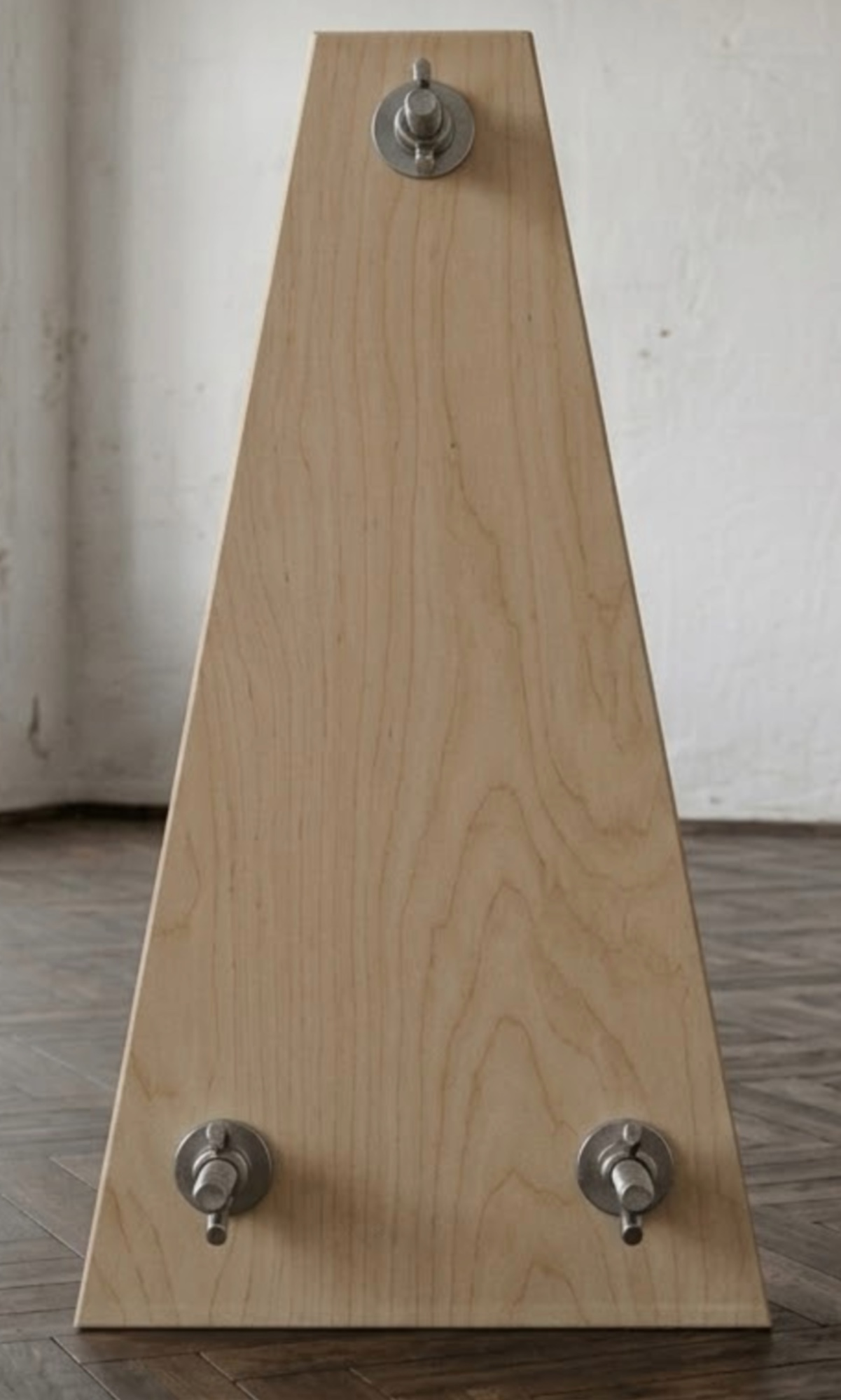
 The plywood furniture configurations are adaptable, built from a shared manifest of interchangeable components. The same verticals are combined with various length horizontals to create the different shapes and sizes.
The system is built on the principle of modularity, in which each component performs its own distinct function, so that parts can be standardised, varied and changed (Ulrich, 1995). A bench can be lengthened, a table widened or a shelving section extended by exchanging or adding components, and pieces of one configuration can find a place in another: the whole remains one coherent system.
This reflects a principle familiar from architecture: structures designed to change with their occupants remain useful over time (Brand, 1994), and separating a lasting structure from the elements that change gives people the freedom to shape their own surroundings (Habraken, 1972). Research into timber furniture modules shows how standardised, separable components with reversible connections allow furniture to be assembled, reconfigured and reused across a long working life (Riggio, Dalle Vedove and Piazza, 2024).
Adaptability is also a principle of the circular economy. Designing products for long-term use, repair and reconfiguration slows the flow of resources, keeping materials, and the value within them, in use (Bocken et al., 2016).
Change itself can be a pleasure. Research following people through their daily lives has found that variety in everyday experience is associated with positive mood (Heller et al., 2020).
References
Bocken, N.M.P., de Pauw, I., Bakker, C. and van der Grinten, B. (2016) 'Product design and business model strategies for a circular economy', Journal of Industrial and Production Engineering, 33(5), pp. 308–320. https://doi.org/10.1080/21681015.2016.1172124
Brand, S. (1994) How Buildings Learn: What Happens After They're Built. New York: Viking.
Habraken, N.J. (1972) Supports: An Alternative to Mass Housing. London: Architectural Press.
Heller, A.S., Shi, T.C., Ezie, C.E.C., Reneau, T.R., Baez, L.M., Gibbons, C.J. and Hartley, C.A. (2020) 'Association between real-world experiential diversity and positive affect relates to hippocampal–striatal functional connectivity', Nature Neuroscience, 23, pp. 800–804. https://doi.org/10.1038/s41593-020-0636-4
Riggio, M., Dalle Vedove, A. and Piazza, M. (2024) 'Load-bearing furniture modules for fast deployable and reusable systems', Frontiers in Built Environment, 10, 1405500. https://doi.org/10.3389/fbuil.2024.1405500
Ulrich, K. (1995) 'The role of product architecture in the manufacturing firm', Research Policy, 24(3), pp. 419–440.
 OCTAVE pedestal II. 81/81£828.00
 OCTAVE pedestal. 81/81£810.00
 ART trestle. 36/90£396.00
 MONKEY puzzle. 27/81£369.00
 A is for ART II. 99/234£2,988.00
 GALLERY pigeon. 27/198£2,700.00
 Lil' SECKAR pew. 54/90£810.00
 F is for FRED. 27/81£252.00
 SHOP pigeon. 45/198£3,060.00
 Skinny ART II. 45/198£1,620.00
 A is for ART. 99/234£2,700.00
 Skinny ART. 45/198£1,440.00


